
Organic Materials and Elements as Architectural Intelligence
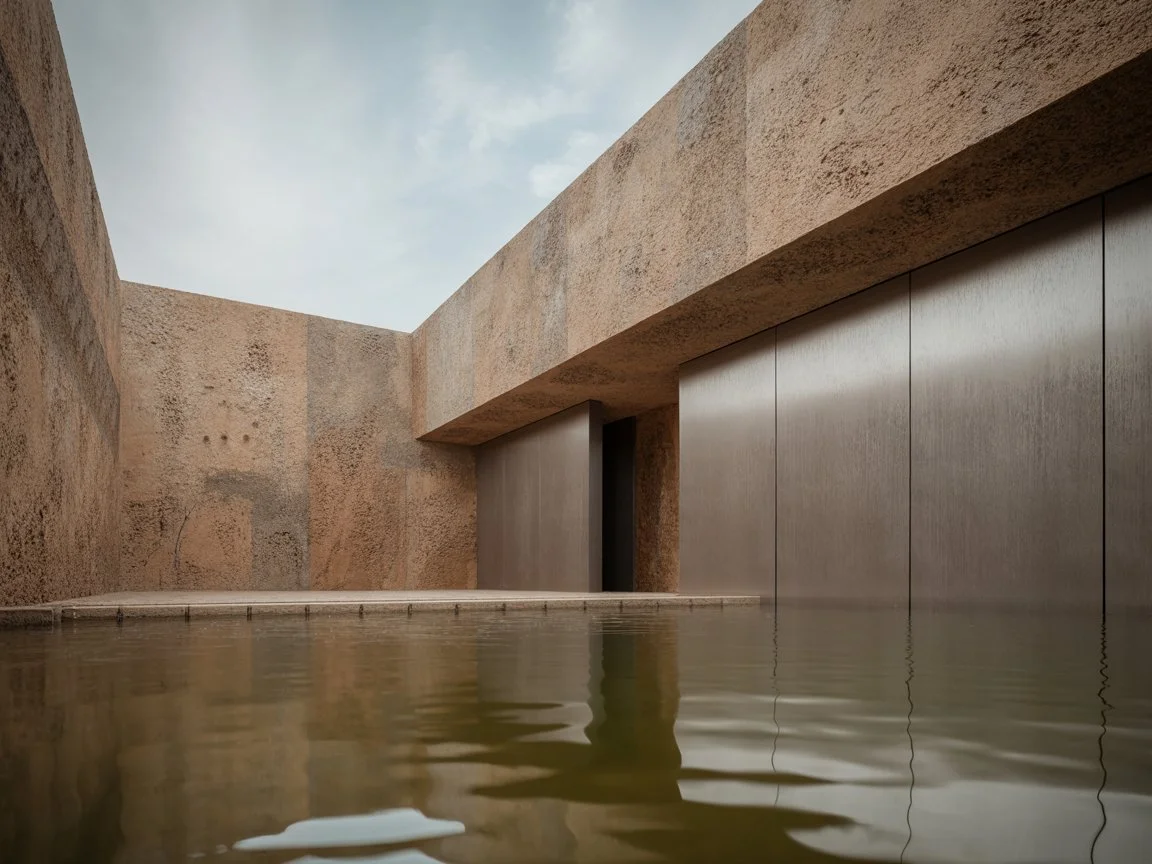
Material truth guides architecture toward integrity of form and atmosphere.
Natural surfaces respond to light and time and root buildings into landscape and life, giving each space meaningful resonance and physical clarity.
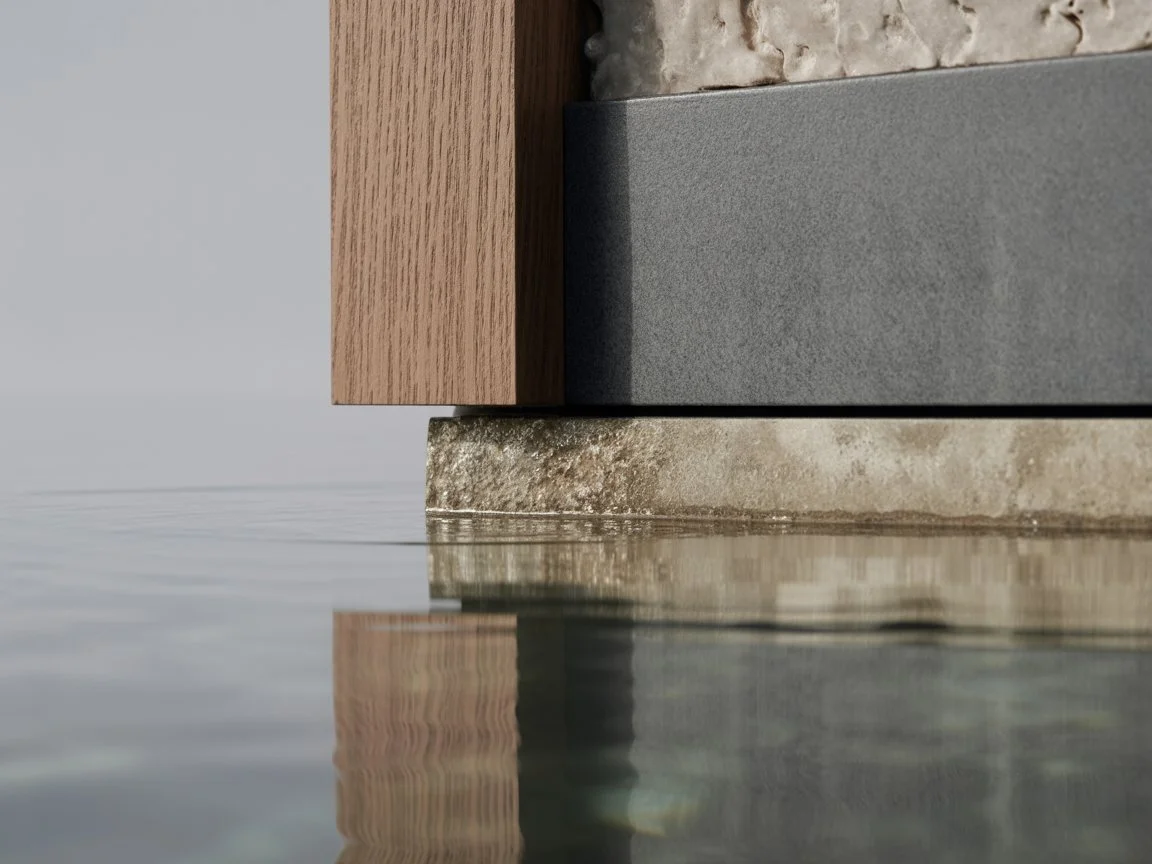
Contemporary architecture increasingly returns to a fundamental vocabulary rooted in five elemental forces: fire, metal, earth, water and wood. These elements provide more than symbolic reference. They define how space breathes, carries weight, reflects light and supports life. Architecture grounded in this elemental understanding responds to both physical necessity and human perception with clarity and intention.
Earth forms the foundation of architecture’s material intelligence. Clay, stone and soil anchor buildings within their geological context. They regulate temperature and humidity through mass and porosity, offering stability and quiet permanence. Earth-based materials engage gravity directly and provide a tactile connection to place. Their presence affirms architecture as part of the land rather than an imposition upon it.
Wood introduces warmth, flexibility and temporal awareness. Its grain records growth and age, offering surfaces that change over time without loss of integrity. Wood responds to moisture and air, contributing to interior balance and comfort. Its structural and sensory qualities foster environments that feel calm and measured. Architecture that integrates wood benefits from its capacity to support both structural logic and human scale.
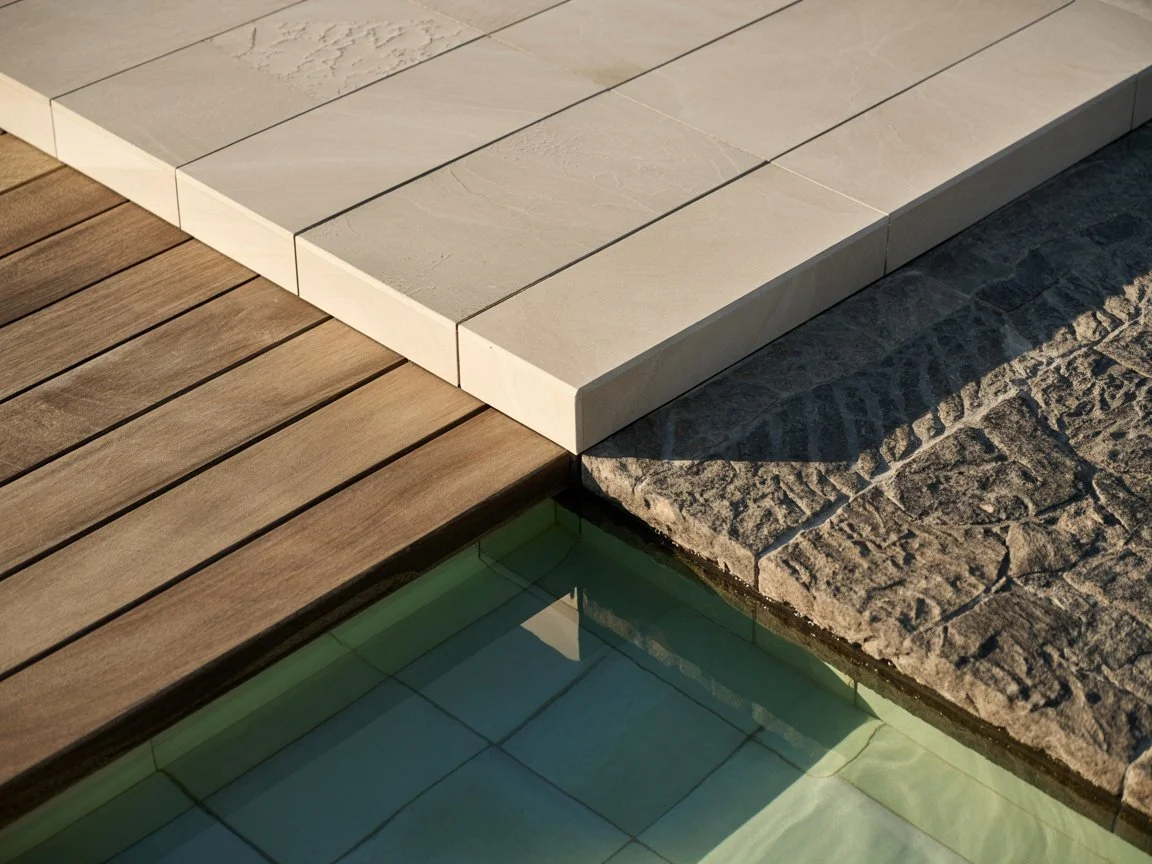
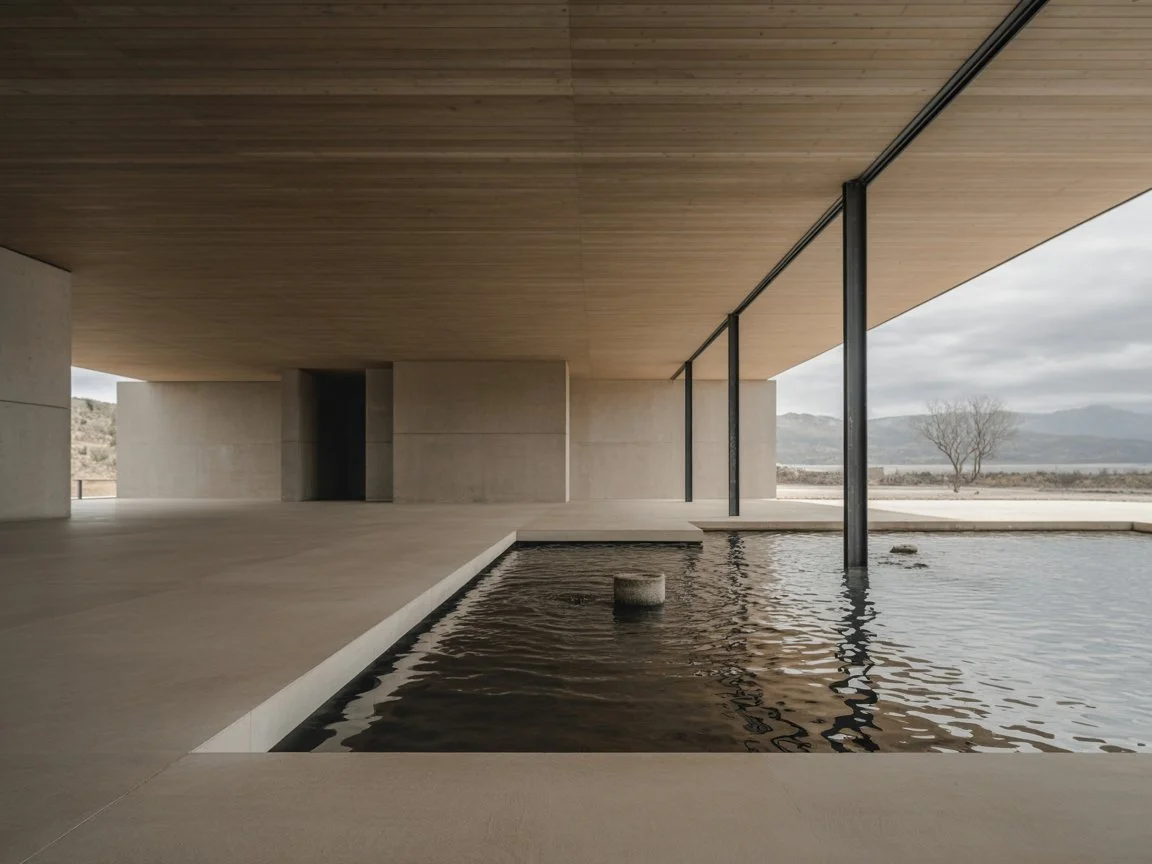
Water shapes architecture through movement and reflection. It influences spatial rhythm, cooling environments and softening acoustics. In architectural contexts, water becomes a mediator between inside and outside, between built form and landscape. Its presence heightens awareness of time through sound, evaporation and light interaction. Water encourages attentiveness and continuity within space.
Fire represents transformation and energy. In architecture, fire appears through processes rather than form. It manifests in the firing of ceramics, the forging of metal and the hardening of earth-based materials. Fire grants durability and resistance. It transforms raw matter into material capable of supporting habitation. Its role remains essential to how architecture achieves permanence and resilience.
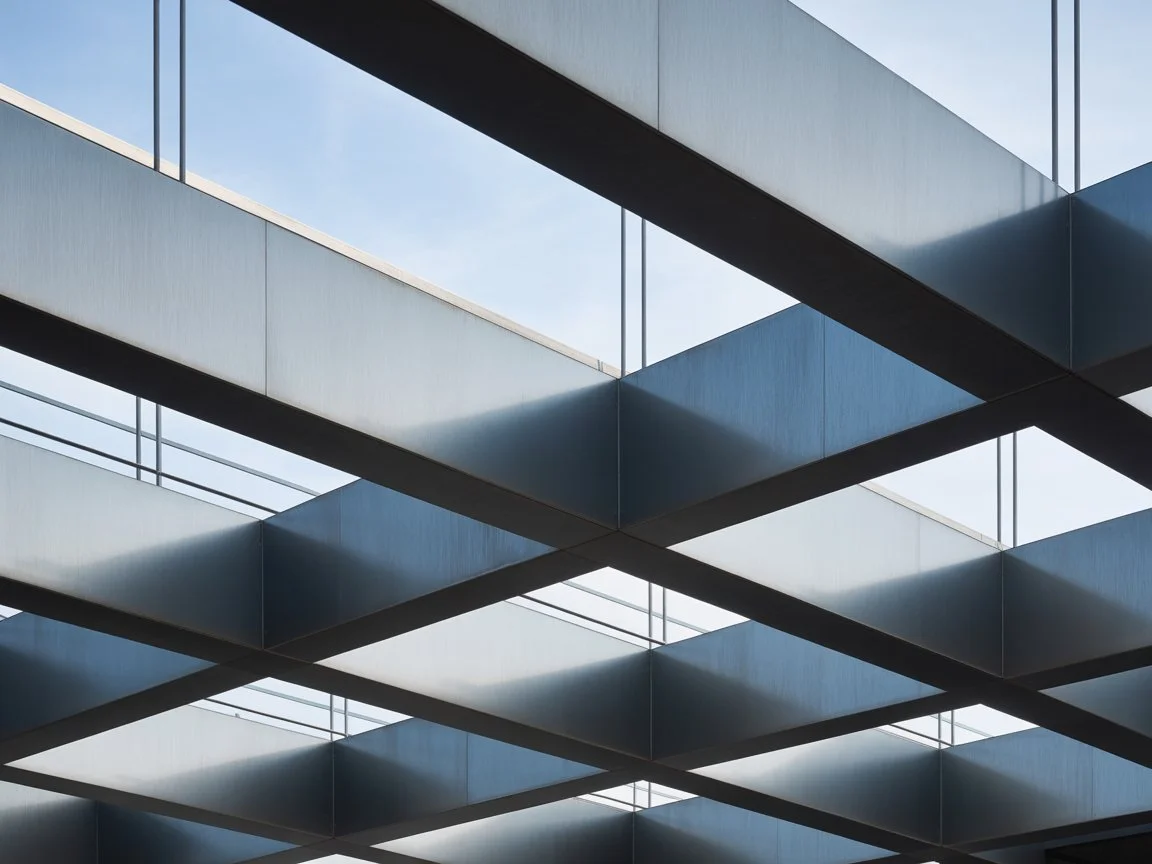
Metal introduces precision, tension and reflection. It supports structure while enabling slenderness and adaptability. Metal responds to heat, pressure and time with visible clarity. Its use requires understanding of force and balance. In architecture, metal complements heavier materials by providing contrast and articulation. It enables architectural systems that remain legible and honest.
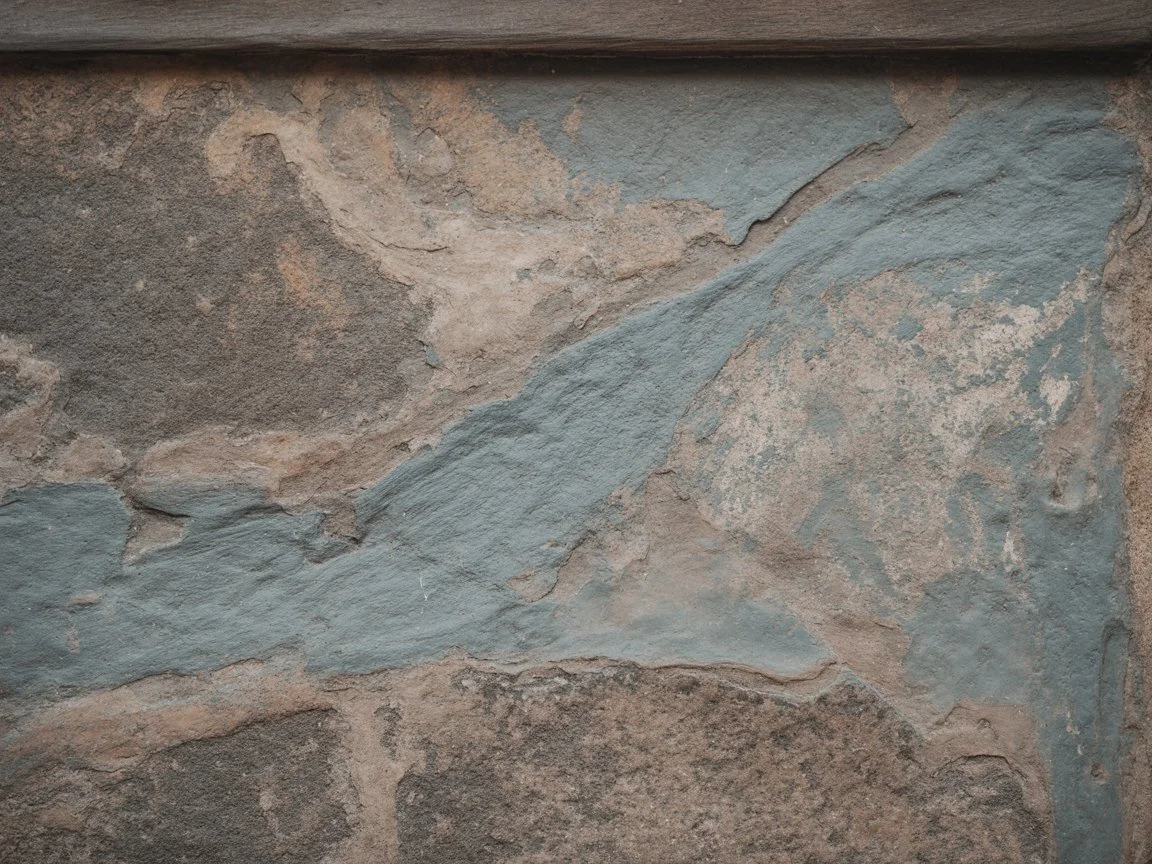
These five elements establish a framework for material responsibility. Their integration requires restraint and understanding rather than excess. Natural materials engage environmental forces instead of concealing them. Wood regulates humidity. Earth stabilises temperature. Water influences microclimate. Metal carries load efficiently. Fire ensures durability through transformation. Together, they contribute to architecture that supports comfort with minimal reliance on artificial systems.
Material choice carries ethical weight. The construction industry contributes significantly to environmental impact, with material extraction and processing at its core. Natural materials often require lower energy input and offer long-term performance. Timber stores carbon. Earth-based materials demand minimal industrial transformation. Metal, when used with precision, provides longevity and recyclability. These factors align architecture with ecological responsibility.
Beyond performance, natural materials shape perception. Texture, weight and sound influence how space feels and how people move within it. Light interacting with uneven surfaces creates variation rather than uniformity. Such environments support concentration, calm and sensory awareness. Architecture gains depth when materials reveal their character through use and time.
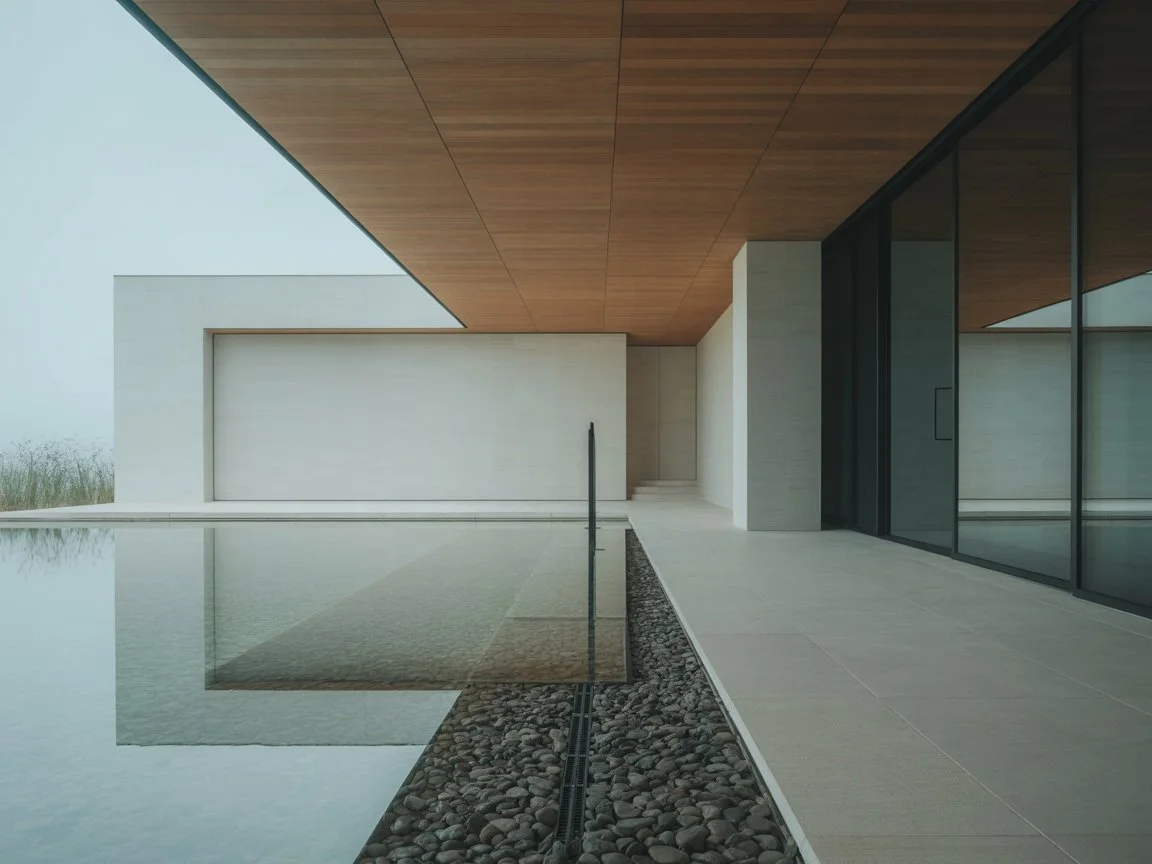
Cultural continuity emerges through elemental materiality. Materials tied to land and craft traditions reinforce identity without nostalgia. Architecture rooted in elemental logic speaks a universal language grounded in physical reality. It resists spectacle and affirms presence.
By returning to fire, metal, earth, water and wood, contemporary architecture reclaims material intelligence. These elements offer architecture durability, restraint and meaning. They position space within natural cycles and human experience, providing environments that feel grounded, attentive and enduring.