Architecture as Ecosystem - Permaculture Principles
A house built on permaculture principles and five-element philosophy. Food grown at the door, warmth collected from the sun, water returned to the land. Architecture as a way of living well.
Wood, fire, metal, earth, water. Five elements. One house. A permaculture garden, a natural pool, a solar greenhouse. A life measured not in consumption, but in what the land gives back.
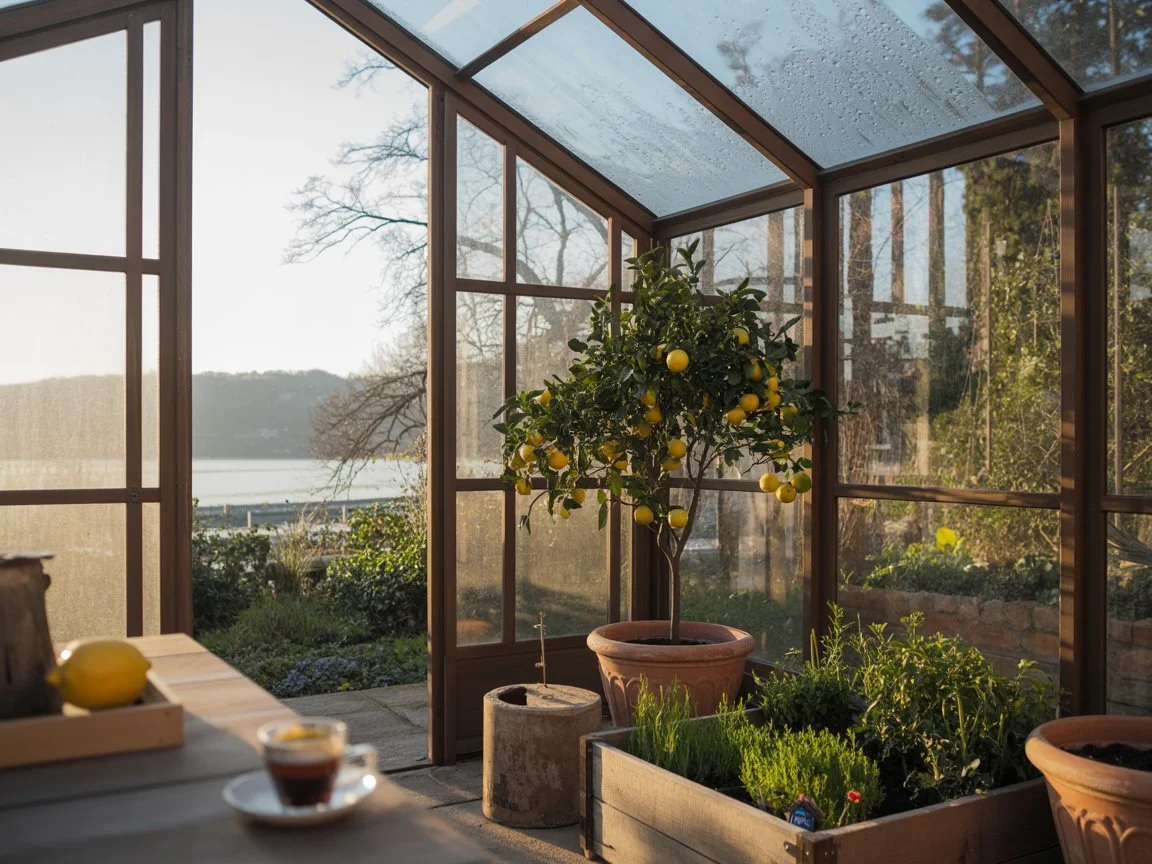
There is an old Italian idea that the good life costs nothing extraordinary. A morning in winter light. A lemon picked before coffee. The sound of water in a garden. La Dolce Vita was never about excess; it was always about sufficiency arranged beautifully.
The project begins with permaculture, a design methodology rooted in three ethics: care for the earth, care for people, and fair share. These are not abstract principles. In the context of a self-built house, they become direct decisions: how the building sits on the land, how it manages its water, where its materials come from, and what it gives back over time. Permaculture reduces unnecessary labour. It designs systems that largely take care of themselves, and in doing so, it returns something most architecture inadvertently steals: time.
“La Dolce Vita rewritten in timber, soil and rainwater.”
Two frameworks govern the project: permaculture, with its three core ethics of earth care, people care and fair share, and the five-element philosophy of Wood, Fire, Metal, Earth and Water.
Layered over this ecological intelligence is the philosophy of the five elements, Wood, Fire, Metal, Earth and Water. This is not decoration. It is a structural lens for understanding how a building breathes, how its materials relate to one another, and how a home becomes part of a cycle rather than a disruption of one.
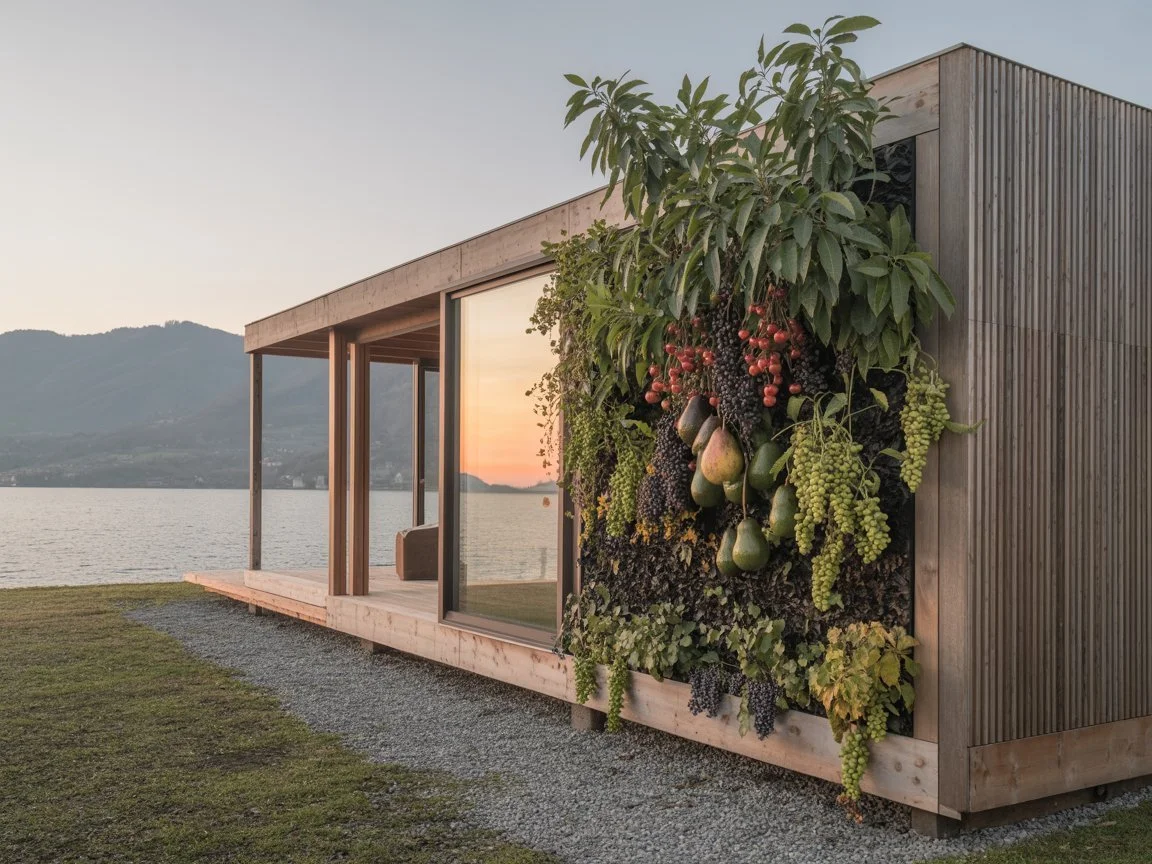
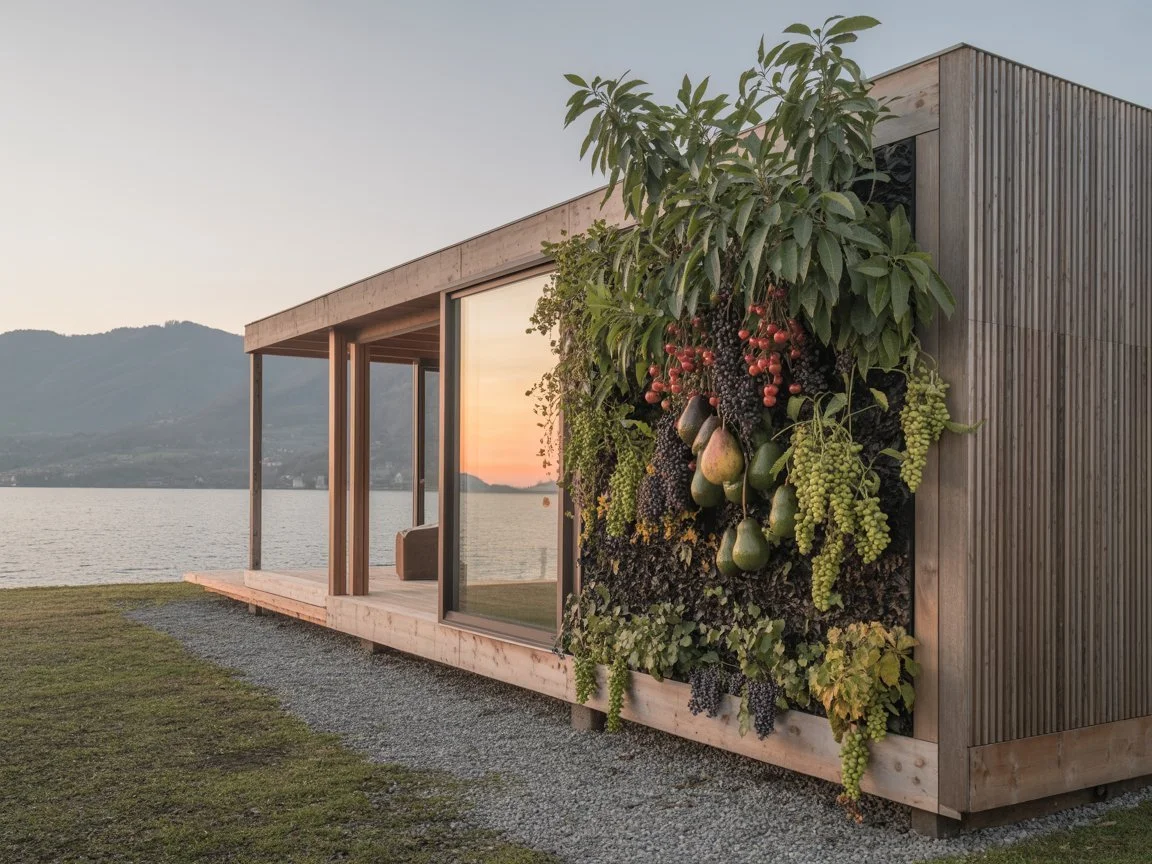
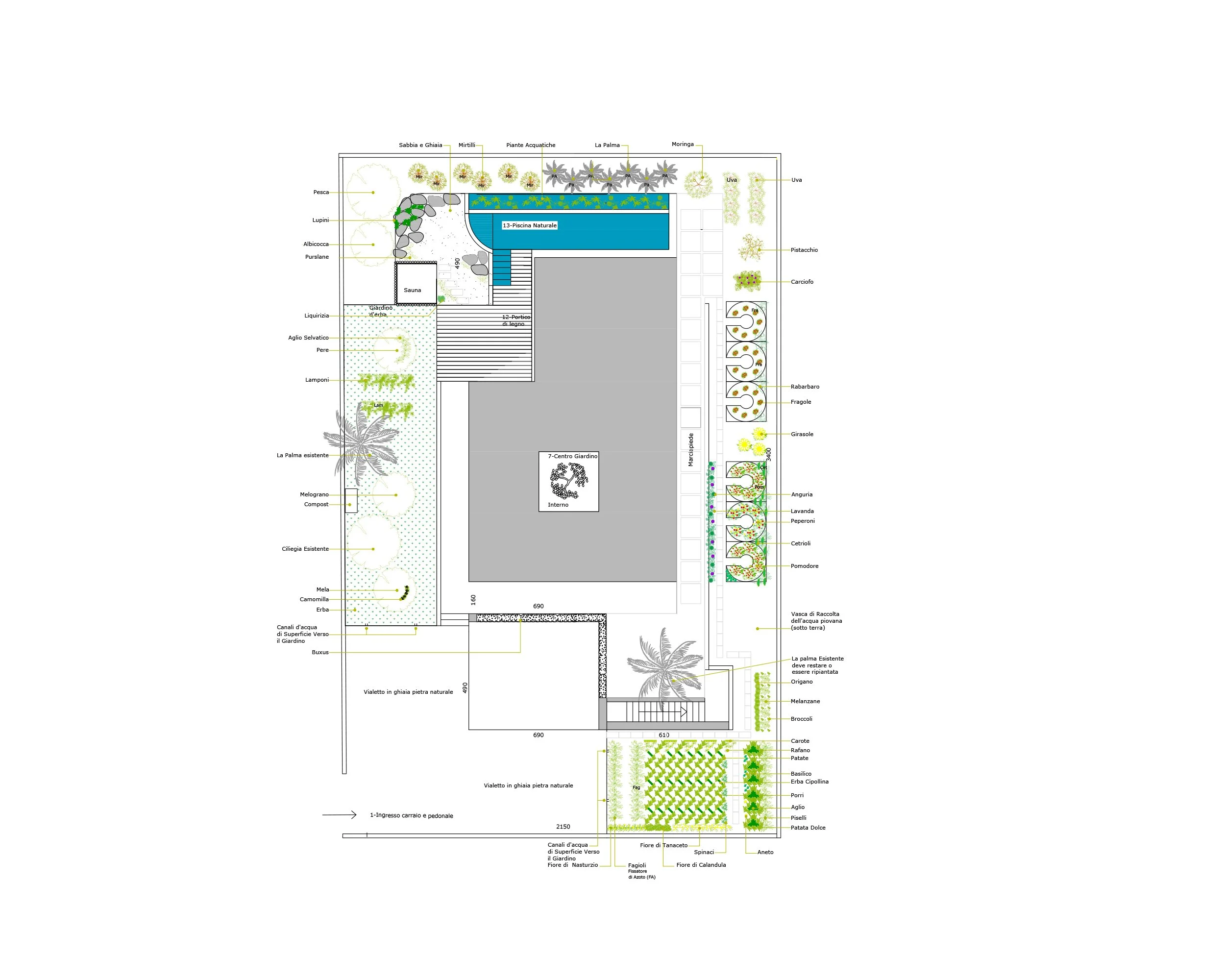
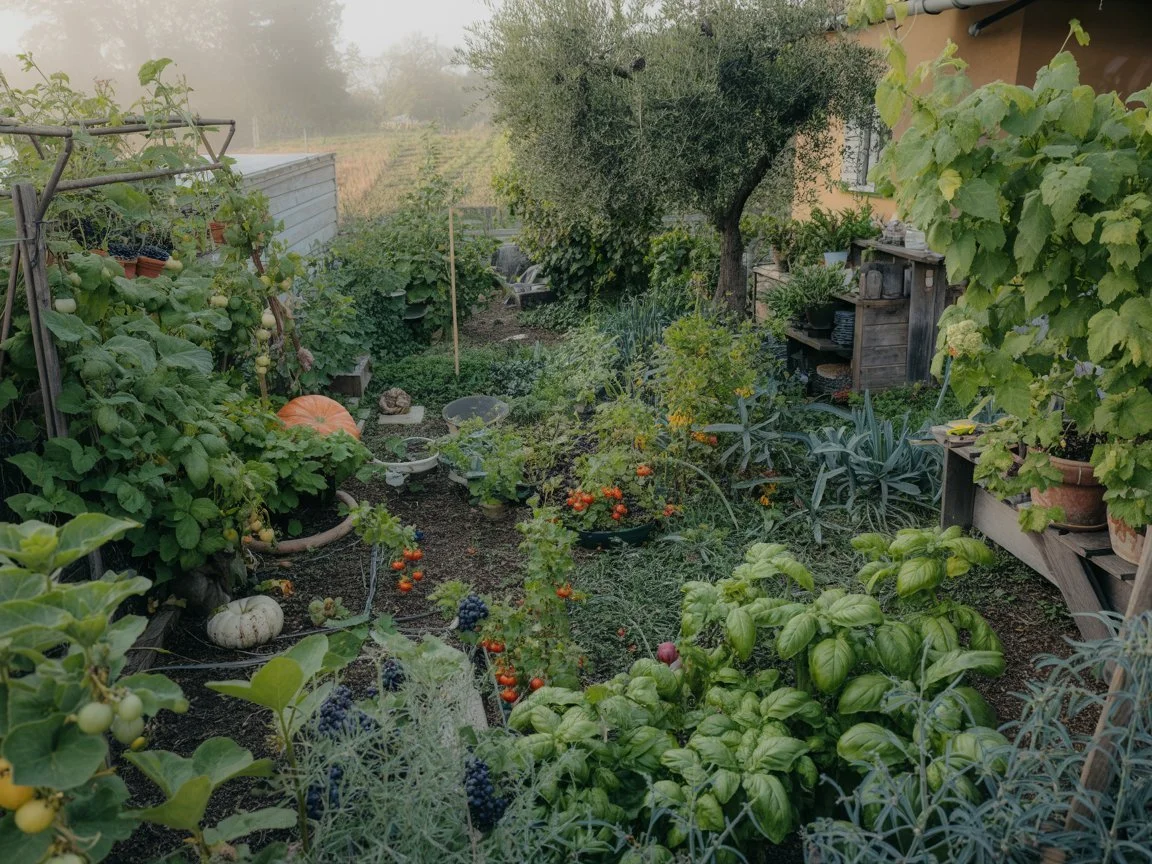
Wood arrives first, as it always does in living systems. Here it appears as timber framing, interior finish and structural logic, but also as the vertical food forest planted along the garden's south-facing elevation. Avocado, cherry, apricot, pear, apple. Blueberries in repeated rows. Pomegranate, pistachio, moringa, grape. These are not ornamental choices. They are a food system, a microclimate buffer and a visual argument for what a garden wall could be.
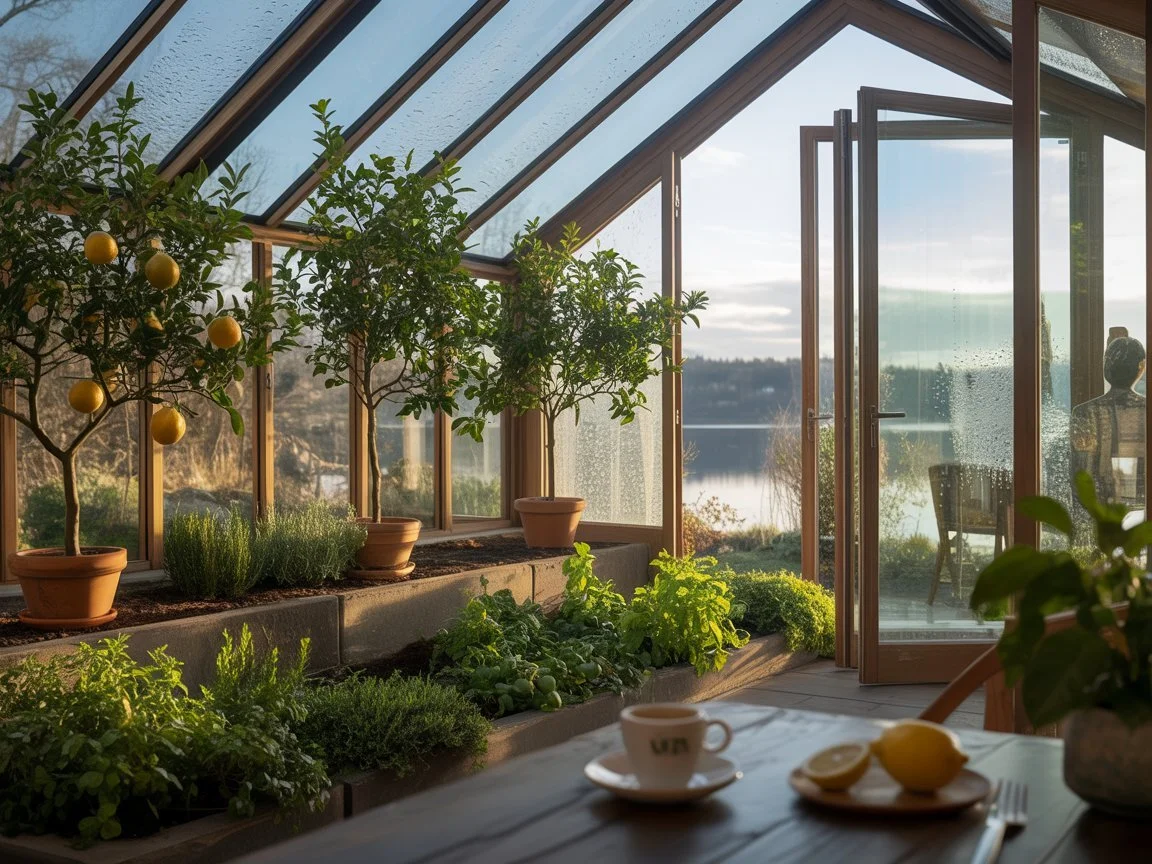
Fire follows: the energy that warms and transforms. In this house, fire is captured before it is burned, held in solar panels and the Serra Solare Bioclimatica, an internal greenhouse that traps winter sun and circulates warmth through the building. To sit inside it in January, among citrus and herbs, with the lake visible through glass, is to understand that passive solar design is also, at its best, a form of pleasure.
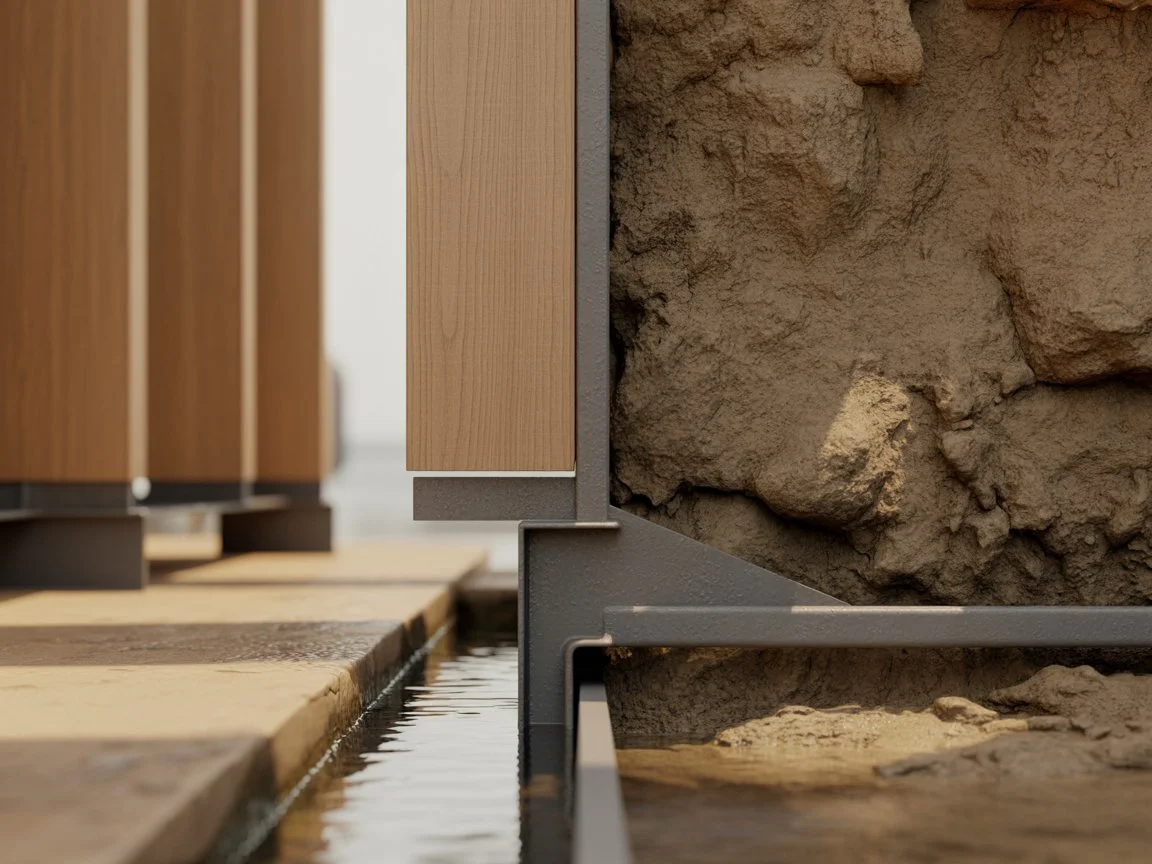
Metal holds the structure together: the pipes, the electrical systems, the tools, the roof. It is precision in service of the organic. It channels and conducts. Without it, the more alive elements of the project would have no vessel.
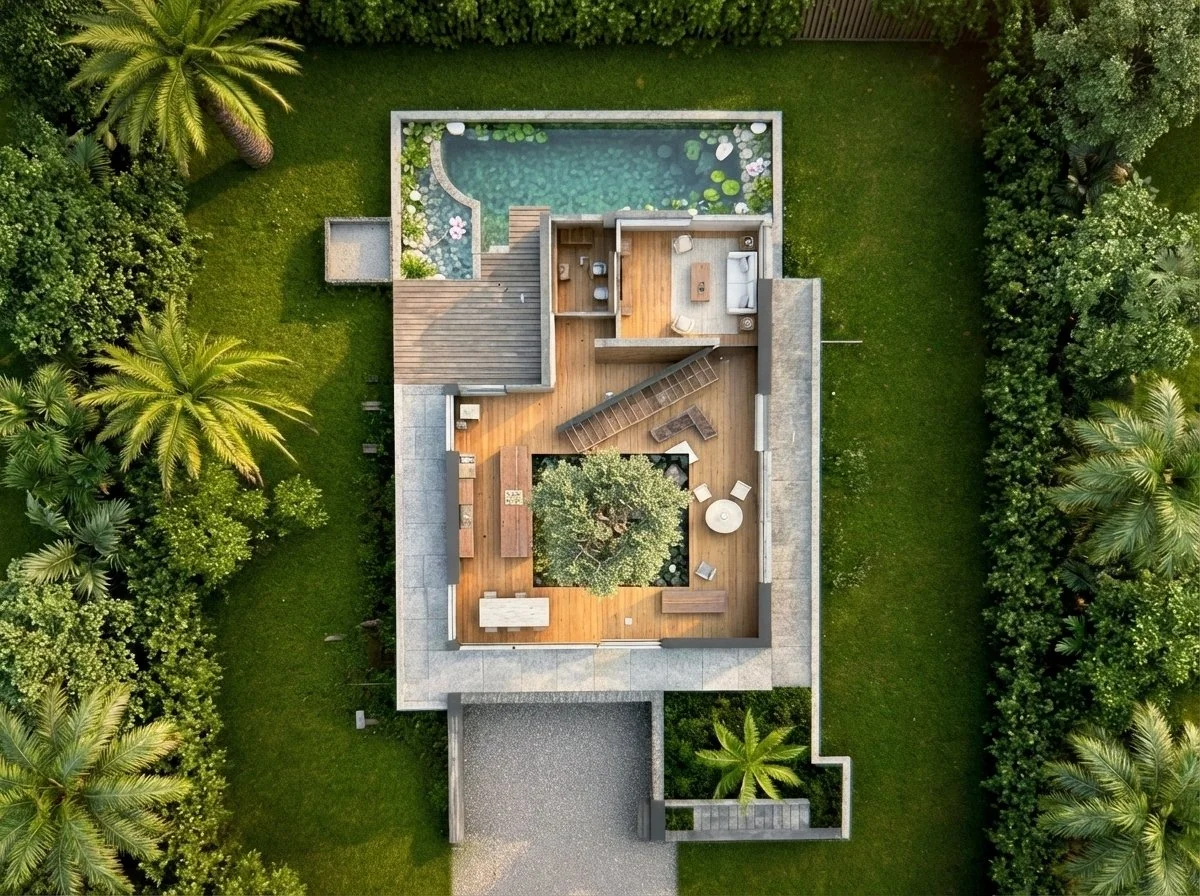
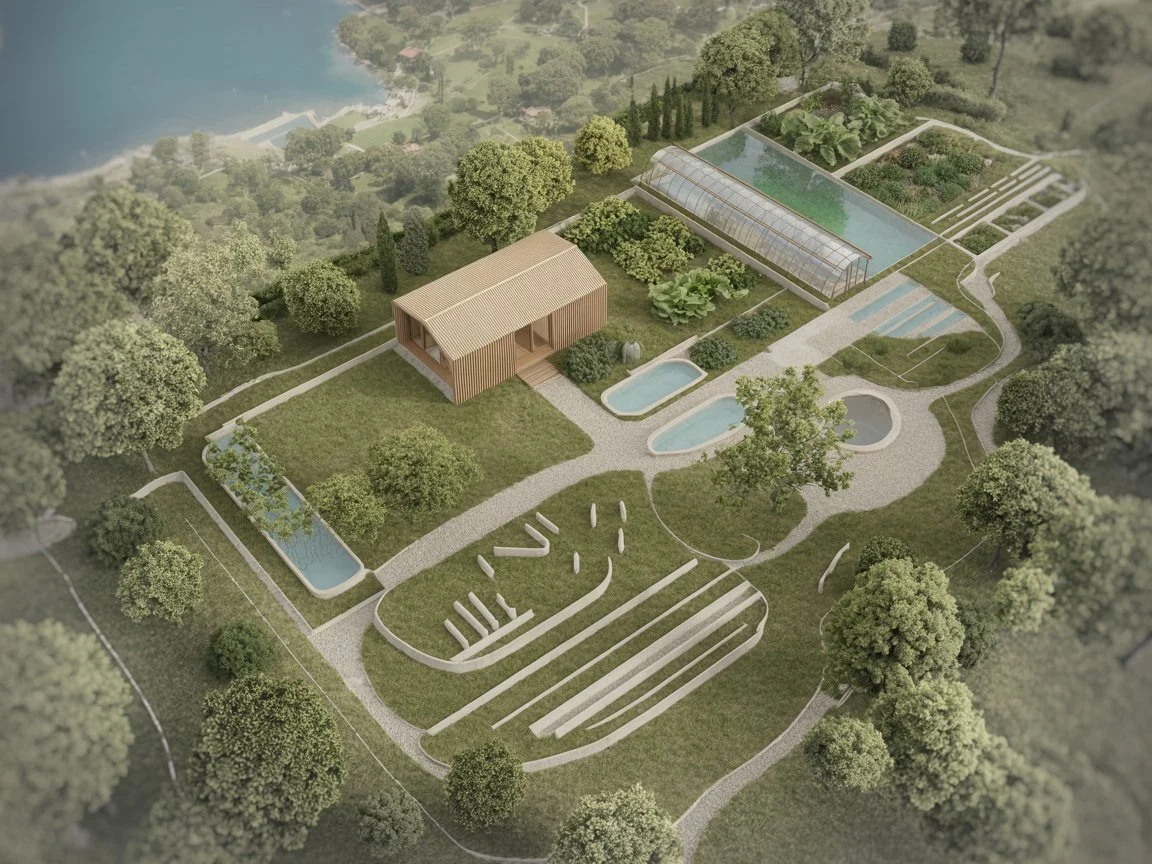
Earth is underfoot and in the walls. Thermal mass regulates temperature without mechanical intervention. The soil itself is a design material, fed by compost, structured for food production and shaped to move water slowly across the land rather than shedding it quickly. A chicken run occupies one corner of the garden, a small daily rhythm of feeding and collecting that reconnects domestic life to natural time.
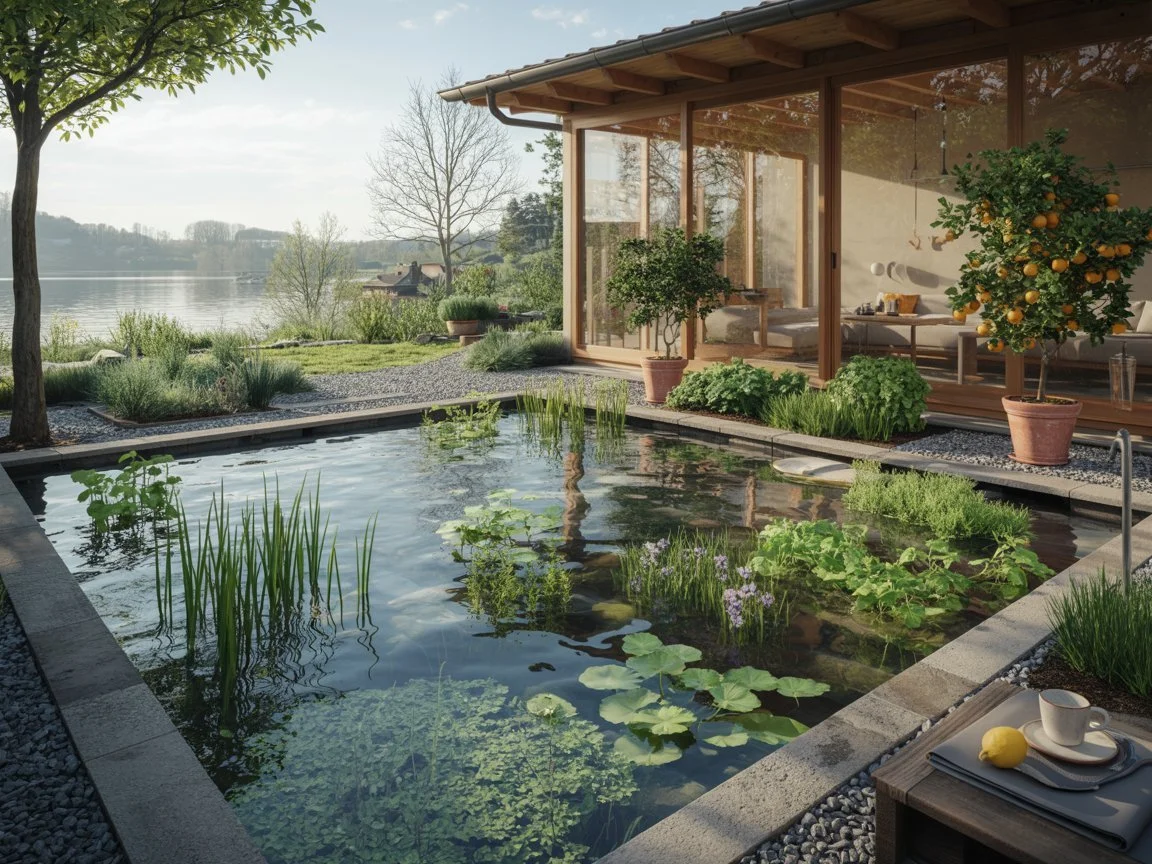
Water is the element that connects everything else. Rainwater is captured from the roof and directed into underground collection tanks, then routed back into the natural pool and the garden. The pool itself is the centrepiece of the outdoor space: a Piscina Naturale in which aquatic plants, water chestnut, iris, watercress, hornwort and submerged oxygenators do the work that chlorine does in conventional pools. The water is softer. The experience is different in quality, not just chemistry. Around the pool, edible species continue the logic of the garden: you are not beside nature here, you are in it.
Chlorine-free water is softer to swim in. A solar greenhouse is warmer and more fragrant than a radiator.
A food forest is more interesting to walk through than a lawn.
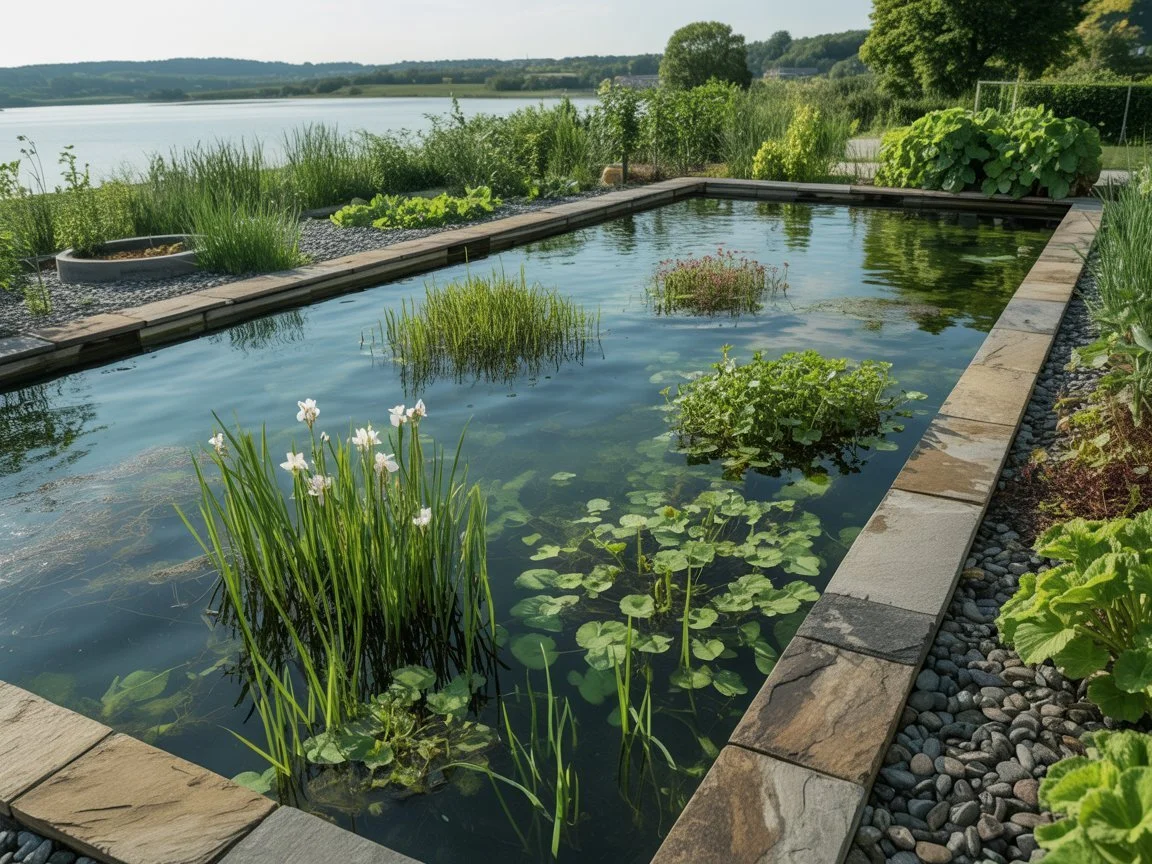
Surface water channels run from the pool zone back toward the garden beds, completing a closed circuit where almost nothing is wasted and almost everything returns.
What this project demonstrates is that ecological architecture need not sacrifice comfort in order to perform its principles. The Serra Solare is not a utility room, it is the most pleasant room in winter. The food forest is not a project, it is a pantry. The natural pool is not a compromise, it is a better pool. At every point, the sustainable choice is also the more beautiful one.
The five-element cycle resolves itself here: wood feeds fire, fire creates ash that returns to earth, earth bears metal, metal enriches water, water nourishes wood. A house is usually a terminus, a place where resources arrive and are consumed. This one is a circuit. Materials move through it. Energy passes through it. Water completes its journey and begins again.
La Dolce Vita, in this reading, is not a mood or a memory from a Fellini film. It is a design specification. It is what happens when architecture takes seriously the idea that how we build determines how we live, and that living well and living lightly are, in fact, the same ambition.